
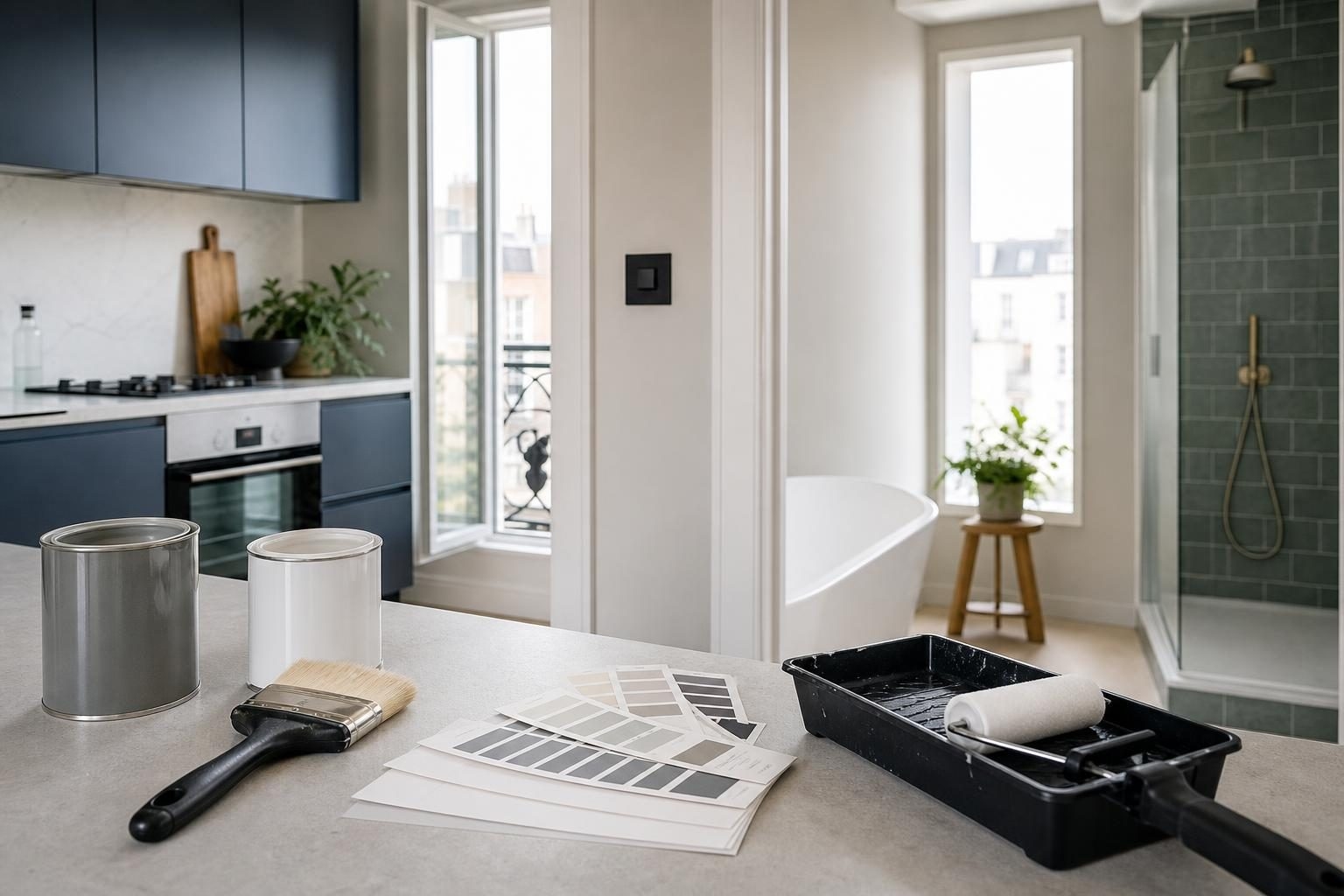
In a kitchen or bathroom, paint is under constant pressure. Steam, splashes, grease, repeated cleaning and daily contact all put the finish to the test. If you are looking for bathroom paint Brussels or kitchen paint Molenbeek, the smartest approach is not to start with color alone. Start with three practical questions: what is the surface like, how much moisture does the room face, and which finish will actually be easy to live with? At Star-Tapis, we often see the same issues again and again: peeling paint because the wall was not dry enough, a finish that shows every mark because it is too matte, or a surface that was not prepared properly. The right product matters, but preparation matters just as much. Here is a clear, homeowner-friendly way to make the right choice.
1. Look at the room’s real use before you choose a product
A kitchen and a bathroom do not face the same conditions. In a kitchen, the main concerns are grease, fingerprints, cooking steam and splashes around the sink or worktop. In a bathroom, you also deal with condensation, humidity after showers and sometimes limited ventilation.
That means you should first look at where the paint will actually go. A wall far from water exposure does not need the same level of resistance as the area behind a sink or next to a shower. In Brussels apartments, where spaces can be compact, that difference matters even more.
If you are unsure between two options, always start from the real use of the room. A pretty color cannot compensate for a finish that is too delicate in a high-use zone.
2. Surface preparation is what makes the paint last
Even good paint performs poorly on a surface that is dusty, greasy, damp or flaky. That is especially true in kitchens and bathrooms. Before painting, check that the wall or ceiling is clean, sound and dry. If old paint is peeling, plaster is damaged or stains are showing through, those issues need to be dealt with first.
Clean the surface carefully, especially in kitchens where grease can build up invisibly. Fill small holes and cracks, sand where needed, then remove all dust. On porous or uneven surfaces, a suitable primer helps even out absorption and improve adhesion.
In a bathroom, it is important to understand the source of moisture. A wall with some condensation is not the same as a surface that gets regularly wet. If you notice recurring damp problems, have them checked by a qualified professional before repainting. Painting over an unresolved issue usually leads to disappointment.
3. Pick a finish that is practical to maintain
Finish makes a big difference. For kitchens and bathrooms, a very flat matte finish is often less practical because it tends to show marks and rub marks more easily. A very glossy finish, on the other hand, can highlight wall imperfections more than you want.
For that reason, many homeowners choose a satin or soft eggshell finish. It often gives a good balance between appearance, washability and the ability to hide small flaws. In bathrooms, that is usually a reassuring option. In kitchens, especially around work areas, easy cleaning is the key factor.
So do not choose only based on trend or on what looks best on a color card. Think about cleaning, steam, splashes and everyday use. The more intense the room’s use, the more practical the finish needs to be.
4. Focus on useful properties, not marketing language
When people talk about durable paint, the wording can quickly become confusing. What really matters are practical qualities: good adhesion, ease of cleaning, a suitable appearance and compatibility with the existing surface. A paint described as “special” is not always necessary, but a product made for moisture-prone or heavily used surfaces is often the right direction.
For a kitchen, easy maintenance is usually the priority. For a bathroom, moisture resistance becomes more important. If you are painting over an existing layer, you also need to know whether the new paint works well with the old finish. That is often overlooked.
When you come into the shop with clear information about the room, the surface and the problem you want to solve, we can guide you much more effectively. A family kitchen, a small Brussels bathroom or a rental flat do not always need the same approach.
5. Common mistakes to avoid
The first mistake is painting over a surface that has not been prepared properly. The second is choosing a finish only because it looks nice, without thinking about maintenance. The third is ignoring ventilation. Paint helps, but it does not replace good air circulation in a bathroom.
Another common mistake is skipping primer when the surface really needs it. On new plaster, porous walls or repaired areas, that can weaken the final result. Painting a glossy old surface without sanding or preparing it properly also leads to poor adhesion in many cases.
It is also important not to confuse temporary moisture with a structural problem. A bathroom naturally feels humid after a shower. But if walls stay damp, blisters return or marks keep reappearing, have the situation checked before painting again.
6. Practical buying tips for Brussels homeowners
In Brussels, many customers come in with very real-life situations: an older home in Molenbeek, a small bathroom without much ventilation, a busy family kitchen or a renovation done in stages. In those cases, it helps to bring photos of the surface, or even a sample of the existing paint if you are repainting over an older finish.
Light matters too. A darker room behaves differently from a bright kitchen with lots of daylight. In many cases, a satin finish gives a clean, practical result without making wall imperfections too visible.
Plan the job in the right order: clean first, repair second, prime if needed, then apply the finish. Rushing the process often creates more work later.
Frequently asked questions
What kind of paint is best for a bathroom in Brussels?
Choose paint that is suitable for moisture-prone rooms, easy to clean and applied on a properly prepared surface. Satin is often a practical choice, but the condition of the wall and ventilation still matter a lot.
What is the best finish for a kitchen?
A satin or soft eggshell finish is often practical in kitchens because it is easier to clean than deep matte paint while still looking softer than high gloss.
Do I always need a primer?
Not always, but it is often useful on porous, repaired, stained or very different surfaces. Primer helps with adhesion and gives a more even result.
Can I paint over a damp wall?
No. First identify and address the cause of the dampness. If the problem keeps coming back, have it checked by a professional before repainting.
In summary
Choosing durable paint for a kitchen or bathroom is really about matching the product to the room, preparing the surface properly and selecting a finish that is easy to maintain. If you are planning bathroom paint Brussels or kitchen paint Molenbeek, visit Star-Tapis with your questions or photos and we will help you think it through in a practical way.