
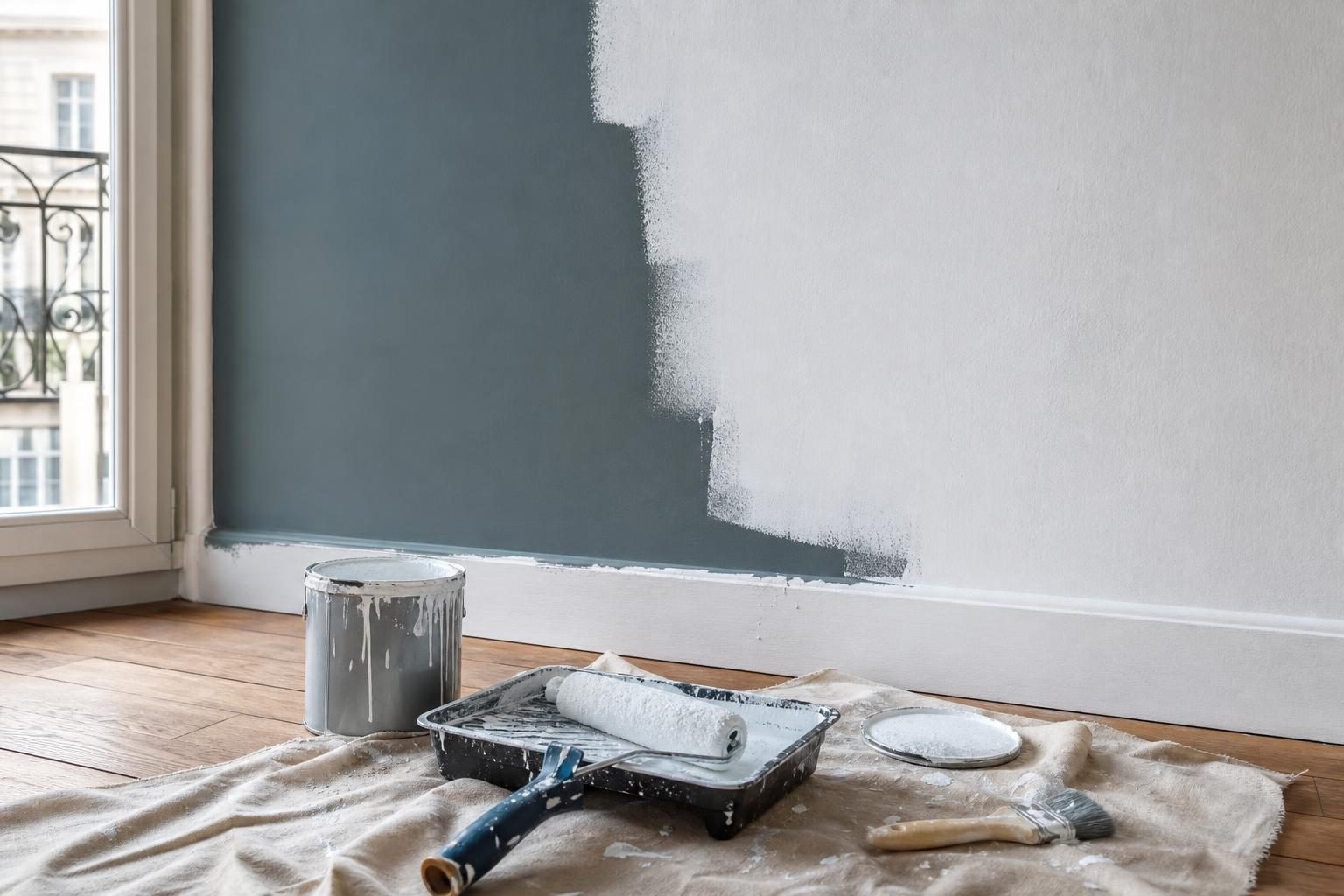
Painting a room yourself sounds straightforward: choose a colour, open the tin, and start rolling. In reality, small mistakes show up very quickly in the finished result. At Star-Tapis, we often see the same issues repeat, especially when people want to move too fast. The good news is that most of them are easy to avoid with a few simple habits. The final result depends on more than the colour you pick. Preparation, the right tools, and the condition of the wall matter just as much. If you are repainting a living room, bedroom, hallway or kitchen in Brussels, it is worth checking the surface before you begin. That is usually where the real difference is made.
1. Skipping proper surface preparation
This is the most common mistake. Many people think a fresh coat of paint will hide everything. In practice, dust, grease, small repairs and uneven areas often become more visible after painting.
Clean the surface, remove dust, and fill small holes or cracks before you start. If the wall is flaking, shows signs of moisture or looks unusual, paint is not the solution. In that case, it is safer to ask a qualified professional to assess the problem first.
2. Choosing paint only by colour
Colour matters, but it should not be the only factor. Paint for a bedroom is not automatically the right choice for a kitchen, bathroom or busy hallway.
You should also think about the finish: matt, satin or washable paint each gives a different look and level of maintenance. In rooms that need frequent cleaning, durability and ease of care are often just as important as the shade itself. If you want to compare options, take a look at our Paint range.
3. Forgetting primer or undercoat
A wall that absorbs unevenly, has been repaired, or is covered with a dark colour can easily lead to patchy coverage. Without a suitable primer, you may need more coats and still end up with an uneven finish.
Primer helps even out absorption and improve adhesion. It is not always mandatory, but it is often the step that separates an average job from a clean result. For supporting materials, our Products & tools section can help you prepare better.
4. Using the wrong or worn-out tools
An old roller, a poor brush or the wrong accessory can make the job harder than it needs to be. The paint may spread unevenly and leave marks or visible edges.
The roller should suit the wall and the paint. The brush is there for corners, edges and finishing. You will also need masking tape, a tray and protection for the floor and furniture. If you are unsure, it helps to bring a few photos of the room and ask in store.
5. Expecting one coat to be enough
Even good paint often needs two coats for an even result. Trying to do everything in one pass can leave dull patches, uneven coverage and visible lap marks.
It is also important to respect drying time between coats. Painting too early can lift the first layer, create streaks or affect the final appearance. If you are covering a dark colour or making a big colour change, allow extra time.
6. Painting in poor conditions
Temperature, humidity and ventilation matter more than most people think. A room that is too cold, too damp or badly ventilated can slow drying and make the finish less reliable.
In a Brussels home, especially in winter, it is worth checking the room conditions before you start. Good ventilation, without creating too much dust or draught, helps the paint settle properly.
7. Not protecting the space enough
Floors, skirting boards, sockets, switches and furniture all need proper protection. Small splashes are easy to make and much harder to remove once dry.
Masking and covering take time, but they prevent extra cleaning and avoid damage. If your room has parquet, carpet or vinyl flooring, protect it carefully before you begin.
Frequently asked questions
How many coats of paint do I usually need?
Two coats are often enough, but it depends on the surface, the colour change and the paint itself. Check the coverage after the first coat before deciding.
Do I always need a primer?
Not always, but it is often useful on porous, repaired, dark or glossy surfaces. Primer helps create a more even base and better adhesion.
What is the biggest mistake in DIY painting?
Usually it is poor surface preparation. If the wall is not clean and stable, the final finish is unlikely to look good.
Can I paint directly over old glossy paint?
It is better not to do that without preparation. Depending on the surface, cleaning, light sanding or a primer may be needed.
In summary
When it comes to painting, the result is decided long before the first roller stroke. Good preparation, the right product, suitable tools and enough drying time make all the difference. If you are unsure about your wall or your best option, feel free to visit us in Molenbeek or contact the store.
More practical information
See also: Explore paint options for your project
See also: Useful tools and accessories for painting
See also: More ideas for wall finishes
See also: Advice on durable paint for kitchens and bathrooms